
Procurring Cause – Which agent Gets the Commission?

An interesting question was posed by a real estate licensee the other day.  Let’s look at the facts:

Agent 1 was driving the consumers around and pointed to a new community as they drove past its entrance.  Weeks later the consumers, without any recollection of the property, drove in and looked at the sample.  They met with the Sellers agent (Agent 2), who informed them she did not want to be a dual agent.  They met with the builder and the seller’s agent 20 or 30 times.  More than 250 e-mails were exchanged.  The plans for the home were changed by the builder, with the input from the agent and buyer numerous times.  Finally, the builder said “No more free work without a contract.”  The agent told the buyers to come to her office the next day to prepare the contract so they could have their attorney perform a review.   The next day a contract came in naming Agent 1 as buyers’ agent and demanding one half of the commission.   What portion of the commission is Agent 1 entitled to receive?

There are not many recent Pennsylvania decisions on this topic.  That is because almost all the disputes go to arbitration and never see a court room. There is some good authority from New York which I will examine.   First let’s try to remove some of the clutter from the facts that try to drive a decision by emotion rather than by law.

Every buyer is entitled to a buyer’s agent.  Is every buyer’s agent entitled to share in the commission paid to the seller’s agent?  It seems rather easy to get lost on the topic of being fair to the agent that writes the contract.  The concept of agency is (in my humble opinion) the wrong path to a just resolution.  Emotionally it seems attractive, but it does not follow the courts that have addressed the issue.

The real issue is who sold the house.  In legalese this is often stated as “Who was the efficient and procuring cause?”  The National Association of Realtors has a list of standards that apply to answer this question.  We know this: the buyers went knowing nothing of the property to actually buying it and living there.  It seems that the real test is to take all the facts and place them in one of two columns: one favoring the seller’s agent and one favoring Agent 1.  Some of those facts will have more weight, but that can be the subject of a mental adjustment.

Agent 1           Drove by entrance to community,     Prepare an Agreement of Sale


Agent 2 (Seller’s Agent)       Met with the buyers and showed them the community,   Met with the buyers and helped them pick a specific lot.       Met with buyers and helped them pick a specific model home.  Met with buyers and builder to develop changes to plans  (12 meetings).   E-Mails to and from the buyers about details of the home they were buying  (200+).  Discussions with the buyers about financing the project and a budget.   Meeting with the buyer to discuss price.

With  lists like this it is obviously easier to see who it was that sold the home.  That person is the procuring cause of the sale and is entitled to the commission UNLESS, the multi-list terms and conditions offer to pay a buyer’s agent regardless of procuring cause.
 

Home Improvement Consumer Protection Law (HICPA)

Home improvement contractors in Pennsylvania are subject to regulation. Homeowners often get confused about when the new law, known as the Home Improvement Consumer Protection Act (“HICPA”) applies.  Here is an excerpt from some Continuing Legal  Education materials we recently published that deals with this ACT. It is in outline form.  If you have more questions call us.

HICPA (the Home Improvement Consumer Protection Act 73 P.S. ¶ 517.1 et seq)

  1. The Requirement of Registration – section 517.4 requires registration for anyone who performs home improvement work.
  2. Home Improvement Contracts. The law provides that a home improvement contract is not valid and not enforceable unless:
    1. It is in writing and contains the contractor’s registration number.
    2. It is signed by the owner and the contractor.
    3. It contains the entire agreement between the parties and has all required notices attached.
    4. It contains the date of the transaction.
    5. It contains the name, street address (no P.O. Box numbers), and telephone number of the contractor.
    6. It contains the approximate starting date and completion date.
    7. It includes a description of the work, materials to be used and set of specifications which cannot be changed unless signed off on by the parties.
    8. It contains the total sale price.
    9. It contains a statement of the down money plus advances for purchase of special order materials. (Note deposits cannot exceed 33.33%)
    10. It includes the name, street address and telephone number of all subcontractors known as the date of signing.
    11. It obligates the contractor to maintain liability insurance with fixed limits.
    12. It contains the toll-free telephone number for the Bureau responsible for registration.
    13. It includes a notice of right of rescission for a period of three business days.
  3. Additional provisions for home-improvement contracts:
    1. contracts which contained an arbitration clause must meet certain requirements including:
      1. the text must be in capital letters
      2. the text shall be printed in 12 point
      3. the text must appear on a separate page of paper from the rest of the contract.
      4. The text must contain a separate line for each of the parties to sign.
      5. The arbitration clause cannot be a one-way street.
      6. The text must clearly state where the decision of the arbitration is binding or whether or not it can be appealed to Common Pleas.
      7. The clause shall state whether the facts of the dispute and the decision are confidential.
    2. Voidable clauses. If any of the following clauses are in the contract the owner may elect to void the contract:
      1. a hold harmless clause
      2. a waiver of federal, state or local health life, safety or building code requirements.
      3. A confession of judgment clause (note this does not get you around other provisions in the law barring confession of judgment clauses and consumer transactions.)
      4. An assignment of wages or other compensation for services.
      5. A provision by which the owner agrees not to assert any claim or defense arising out of the contract
      6. a provision that the contractor shall be awarded attorney’s fees and costs
      7. a clause which relieves the contractor from liability for acts committed in the collection of payments or repossession of goods.
      8. A waiver of any rights under HICPA
      9. automatic renewal provisions.
  4. Criminal Provisions – Home Improvement Fraud  It is a crime to engage in certain actions, enumerated below.  Where the dollar value exceeds $2,000.00, the grading is FELONY 3.
    1.  False or misleading statement to induce a contract
    2.  Receiving an advance payment and failing to perform.
    3.  Concealing the real name of the contractor.
    4.  Damaging property in order to induce the need for more work.
    5.  Misrepresenting ones self as connected with government or a utility.
    6.  Misrepresenting that an item is special order or misrepresenting the cost of a special order item.
    7.  Altering a home improvement contract without the consent of the consumer.
    8.   Publishing false or deceptive advertisements.
  5.  Prohibited Acts.  In addition to the criminal acts, the following are prohibited:
    1.  Failing to register.
    2.  Failing to pay refunds under certain conditions including where no work has been done or more than 45 days of elapsed is the start date.
    3.  Promoting a certificate of occupancy as proof of performance when the document is false or performance is incomplete.
    4.  Using a completion certificate when you know or have reason to know the document or proof is false and it is used to secure funds either from the homeowner or a lender.
    5.  Abandoning or failing to perform without justification.
    6.  Deviate from or disregard plans and specifications.
    7.  Participating in the financing of a home improvement contract with knowledge that a monetary obligation will be created in excess of the actual price of the contract.
    8.  Advertising to perform home improvement services if you do not intend to perform the work at the charges advertised are offered.
    9.  Demanding or receiving a payment before the contract is signed.
    10.  Where the contract is for more than $1000, receiving a deposit in excess of 1/3, plus the cost of special order items.
    11.  While acting as a salesperson, failing to turn money over to the contractor.
    12.  After entering into a contract, changing the name of the contractor’s business, liability insurance information or address or any other identifying information in a fraudulent or deceptive manner likely to cause confusion or misunderstanding without advising the owner in writing.
  6.  Unfair Trade Practices and Consumer Protection Law (UTPCPL). A violation of any of the provisions of HICPA is a violation of the UTPCPL. Treat it as though it were item xxii in the list of unfair trade practices. UTPCPL allows a recovery for treble damages (up to three times the amount of actual damages) or $100 per violation, whichever is greater.  Another remedy allowed by the UTPCPL is reasonable attorney’s fees, which may be awarded in addition to any other award, and which may be substantial.
  7.  Contractor’s Saving Provision    Section 517.7 (g) of HICPA provides that nothing in the act shall preclude a contractor who has complied with subsection a, setting forth those items required to be in a contract, from recovering based on the reasonable value of the services performed. This section has recently been reviewed by the Superior and the Supreme Court, and rewritten. A simple reading of the language indicates that if you can’t enforce the contract, you can bring an action for unjust enrichment, providing you have a contract you can enforce. This obviously makes no sense.
  •  In Durst v. Milroy Gen. Ctr  52 A 3d 357 (2012 Pa. Super) the homeowner filed preliminary objections to bar a quantum meruit claim by a contractor who had an oral contract in violation of HICPA.  The Superior Court held “that quasi-contract theories of recovery survive the HICPA.”  The Durst decision was based on the fact that the clear language of the statute did not prohibit a quantum meruit claim.
  •  In Shafer Electric v. Mantia,  67 A.3d 8 (Pa. Super 2013)  the Superior Court followed Durst and held that a reading of the wording of the statute led to an absurd result which violated general principles of PA law. In this case, this panel of the Superior Court based its decision on statutory construction.
  •  In  Shafer Electric v. Mantia  96 A.3d 989 (Pa. 2013),  the Supreme Court affirmed a decision of the Superior Court, on the basis of the holding in Durst v. Milroy, 52 A.3d 357 (2012 Pa. Super.), which held an action for unjust enrichment is available to a contractor even where there is no written contract complying with HICPA.  The Court got to the same result as the Superior Court, but not for the same reasons. The Shafer Electric holding is essentially consistent with the Restatement (Third) Restitution and Unjust Enrichment, sections 31 – 36 which address the subject of awarding restitution to a performing party who has no claim under his or her contract


NBC Investigative report on Toll Brothers quotes Tupitza

NBC 4 in Washington, DC just published an investigative report on Toll Brothers. (If only we could have trained the on-air reporter to pronounce Tupitza as “2 Pits Ah”  instead of  2 pizzas!!!)  Their focus was on buyers who lost their down money when they could not get a mortgage.  Here is a snippet from the article:

“Pennsylvania-based real estate lawyer Jim Tupitza told the News4 I-Team he sees cases like this “all the time” — customers who think a Toll Brothers contract will allow them to recover their down payments if they can’t get a mortgage or close on their home, when that’s not actually the case.

Tupitza said it all boils down to the “Mortgage Application” paragraph of the Toll Brothers contract, which he said is one of the most confusing contracts in the business.

“If you read it,” said Tupitza, “you will think it says one thing. But if you diagram the sentence like you learned in high school English, you’ll realize it doesn’t say that at all.”

See full text of NBC News Article

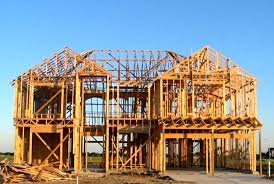
Buying a New Construction Home

Buying a home that is a new construction home seems easier. It is certainly more risky.

It does not matter if the builder is Toll Brothers, Pulte, Orleans or Joe with a pickup truck,  the risks a buyer encounters in new construction greatly exceed the risks in purchasing a used home.

A used home can be inspected as carefully as you would like.  A used house will generally be available on the date you want to move.  The grass will be established and the trees and shrubbery will not need nursing. Most importantly, there will be no subcontractors filing mechanic’s liens because the builder did not pay.new construction

What are the real issues in buying a new home?  Let me try to list just a few.

  1. The contract used by the builder will not be a well-balanced document.  It will not be a standard form that your Realtor® or lawyer will be able to read quickly.  Instead, it will be a one sided document, designed to separate you from your money, even if the house is never built.
  2. The contract will contain an arbitration clause.  The pitch will be that arbitration is quicker and cheaper.  In large commercial disputes, that is exactly correct.  In small consumer disputes, you will be substituting a panel of one to three lawyers to act as judges, who will be paid by you and your opponent at up to $700 per hour each, for a single judge paid solely by everyone’s tax dollars.  If the arbitrator gets it all wrong, there is no appeal.
  3. There will often be no mortgage contingency.  There may be language that looks like a mortgage contingency, but read carefully. For example, the agreement of one of the largest national builders requires you to apply to their mortgage company.  The contract says that if they give you a commitment you must buy.  Here’s the problem, they will give almost everyone a commitment for a loan.  The devil will be in the conditions.  I saw one contingent on the buyers finding $45,000 more cash and raising the wife’s credit score by 50 points.  The people did not satisfy the conditions and the builder claimed their entire deposit and the note they signed for extras which were never installed as the house was never built.
  4. Mechanic’s lien risk is significant.  Most builders push you to their own title insurance company and do not offer you mechanic’s lien coverage.  This means that sub-contractors and sub-sub contractors can file a lien against your property up to six months after their work is done.

There are more risks. If you are buying new construction and do not have a real estate lawyer advising you,   you might also start reading the new book  “Brain Surgery –Self Taught.”  This is one of the biggest financial risks of your life.  Is this a good time to save a few dollars?

Adverse Possession

1.  ELEMENTS          A claimant must prove actual, exclusive, visible, notorious, distinct and hostile possession of the land continuously for 21 years.

2.  STATUTORY BASIS       The statutory basis for adverse possession is 42 Pa. C.S. § 5530, which provides that an owner is barred from commencing an action for the possession of real property after 21 years.

Photo courtesy of Paul Sabelman   http://www.flickr.com/photos/pasa/
Photo courtesy of Paul Sabelman http://www.flickr.com/photos/pasa/

3.  EFFECT     When the elements of adverse possession have been satisfied, the record owner is divested of title and absolute fee ownership vests in the claimant.  Title obtained by adverse possession is marketable.   However, the author is not aware of a title insurance underwriter that will insure such title, absent a final, unappealed and unappealable court order.

4.  DIVESTITURE     “Title [acquired by adverse possession] may be divested only in the manner in which title acquired by formal grant or conveyance may be divested and is not lost by ‘neglecting to keep up the possession.'”

5.  RECORDING       Any person who acquires title by adverse possession and who, thereafter, ceases to remain in possession of the property, must file a statement of claim within 6 months of leaving possession.  68 P.S. § 81.  Failure to record such a statement renders such title invalid against any purchaser, mortgagee or judgment creditor for value and without notice.

Neighbors Trees and Bushes at Property Lines

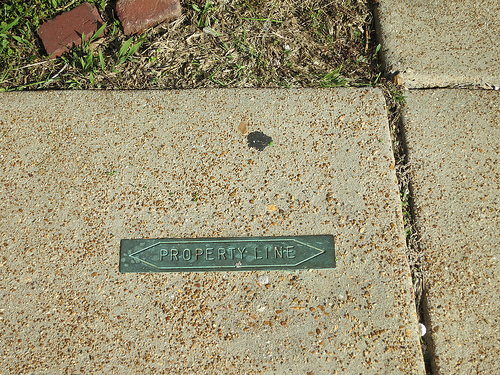
One of the most common points of dispute between neighbors comes from the growth of trees, shrubbery, and bushes.  The planting of an acorn five feet from a property border may be meaningless in the life of the planter.  However, as that tree grows several problems often arise. 6365071347_8881ef5bed

1.  The neighbor, who used to enjoy sitting in the sun in his or her backyard, or at a pool, does not appreciate shade for most of the day.

2.  The neighbor does not appreciate that branches from the tree have grown over into his or her yard, rubbing against the roof and dropping leaves, branches and debris.

3.  A storm causes large branches to drop damaging items in the yard, or perhaps the house.  The neighbor fears for the safety of his or her family.

4.  The neighbor’s view has been obstructed.

How are these issues resolved?  What do the Courts say?

I will address the following:


  1. Do trees support adverse possession claims?
  2. Can you cut a neighbors branches, roots or trunk?

1.     Do trees support adverse possession claims?    Here is the fast answer—-NO.

In a footnote to a Superior Court decision (Jones v. Wagner, 425 Pa. Super. 102, 624 A.2d 166 (1993)) the Court noted it might be possible to have a prescriptive easement for tree limbs after 21 years.  A prescriptive easement is like adverse possession, except title to the land cannot be claimed, only a right to use the land.

In 2004, the same Court held that no prescriptive easements are acquired by the growth of tree branches or roots which encroach onto a neighbor’s property.  The Court based its reasoning on the concept that the growth of trees cannot notify a landowner of a claim to the use of the ground and because  the “potential of widespread uncertainty occasioned by such easements convinces us that they should not be recognized as a matter of public policy.”  Koresko v. Farley,  2004 Pa. Cmwlth , 844 A. 2d 607 (2004). This was an appeal from a decision of a Chester County Judge (Robert Shenkin), who had also said no prescriptive easement arises by the growth of trees.

 2.    Can you cut a neighbors branches, roots or trunk?   Again, here is the fast answer…..YES

Because tree branches do not acquire prescriptive rights (see  section A above),  they are trespassers.  They may be removed, BUT not without risk.  First of all imagine a large oak growing over the property line.  Then imagine your surveyor properly locates the boundary and you set up one of those rotating red lasers on the line.  At night, with the laser spinning and marking the edge of the property, you climb into a bucket truck and cut all the branches at a point 2 inches on your side of the line.  You get out of the truck and go to bed thinking you are home free. The tree now has large, heavy branches on your neighbor’s side and little stubs that go 2 inches onto your side of the boundary.  Your neighbor comes out in the morning and is furious (Oops… maybe you should have given advance notice of your plans).  It takes three or four weeks for your neighbor to get a surveyor out, but when the surveyor arrives, the weight of the lopsided tree has cause it to bend significantly away from your property.  Your neat straight vertical line of cuts are now an angled line with the top located 3 feet onto your neighbor’s property.  His arborist claims the cuts will be fatal and that the tree was worth $75,000.

A landowner may use self-help to remove encroaching tree limbs (so long as he does not trespass on the neighbor’s property), and thereafter recover his reasonable expenses from the trespasser.  The landowner will not be held responsible for any resultant damage to the trees.  In the alternative, the landowner may seek injunctive relief, together with incidental and consequential damages.  Jones v. Wagner, 425 Pa. Super. 102, 624 A.2d 166 (1993) (Note:  In a footnote, the court notes that it may be possible to have a prescriptive easement for the tree limbs after 21 years… )

However, the Superior Court recently held that no prescriptive easements are acquired by the growth of tree branches or roots which encroach onto a neighbor’s property.  The Court based its reasoning on the concept that the growth of trees cannot notify a landowner of a claim to the use of the ground and because of the “potential of widespread uncertainty occasioned by such easements convinces us that they should not be recognized as a matter of public policy.”  Koresko v. Farley,  2004 Pa. Cmwlth , 844 A. 2d 607 (2004).

Deed Out of Estate – Should I use a quitclaim deed?

QUESTION:     Should a decedent’s estate administrator use a quickclaim deed to transfer estate property to himself before transferring to heir.  Administrator does not want to leave the property in the name of the decedent who died 7 years ago  {asked from Philadelphia}

ANSWER:  Let me beak you question into parts.  1) your role as administrator includes the duty to preserve and collect the assets of the estate and distribute them PROMPTLY.  It seems you are a little tardy in this effort.  If you have not filed the tax returns and paid the death taxes, this must be done immediately.  2) If you transfer the property to your name, you expose the property to judgments that might be entered against you.  You also expose yourself to a claim of conflict of interest or breach of fiduciary duty.   3) a quit claim deed is an overused and inappropriate document.  When you convey to the heirs use a deed with administrator’s warranty.


Sheriff Sale Answers Will i loose my judgment lien?

QUESTION:  I have a judgement against a man.  My title search shows that my judgment is is second place behind a small mortgage on his house.  There are 5 judgments after mine and the guy in last place has the property listed for sheriff’s sale.  House worth $350k, mortgage of $25k then me and the others.  If I let it go to sale, will the property still be subject to my judgement?  I can’t get knocked out can I?    (asked in Philadelphia)

ANSWER:   When a property is sold at a sheriff’s sale the general rule is that everyone is divested (or knocked out in your terms).  The exception is that mortgages that have no judgments that are senior to them are saved.  In your case, if the fellow who  the sheriffs sale bids $1, he will get the property subject only to the mortgage.  You will be wiped out.  On the other hand if you bid the amount of your judgment you will get the property.  (you will have to put up the money at the sale unless prior to the sale you meet with the sheriff’s solicitor and can get an agreement to permit you to “credit bid” up to your payoff amount)  If you buy at your price, everyone else is wiped out except the mortgage.  If someone bids over your payoff, they get the property but you get the money.  You must watch for a schedule of distribution from the sheriff.  If this all seems complicated, IT IS!!!  Unless you are comfortable with brain surgery, self taught,  get a lawyer to help you with this.

Nature of Judgment Liens in Pennsylvania

The Pennsylvania Supreme Court discussed the nature of judgment liens in the case of In re: Upset Sale, Tax Claim Bureau of Berks County, 505 Pa. 327, 479 A.2d 940, 943-44 (1984).  The Supreme Court stated as follows:


Judgment liens are a product of centuries of statutes which authorize a judgment creditor to seize and sell the land of debtors at a judicial sale to satisfy their debts out of the proceeds of the sale.  The judgment represents a binding judicial determination of the rights and duties between the parties, and establishes their debtor-creditor relationship for all the world to notice when the judgment is recorded in a Prothonotary’s Office . . .


The judgment lien represents security for the underlying debt, Commonwealth v. Meyer, 169 Pa. Super. 40, 82 A.2d 298 (1951), and conveys a right of execution to the             judgment creditor in satisfaction of his debt . . .


The existence of a judgment lien prevents a debtor from encumbering or conveying any property he might own in such a way to divest the effect of the judgment, while also preventing later lien holders from satisfying their debt without first paying the earlier lien.  The judgment lien thus constitutes a liquidated claim, Educational Society v. W.D. Gordon, 310 Pa. 470, 166 A. 499 (1933), which has value to the judgment creditor.  The judgment can be assigned, pledged or used as collateral and is a valuable form of property . . .


A judgment lien is called a general lien – unlike a mortgage which is a specific lien against a particular piece of real property.  Such has been the recognized law in this Commonwealth for some time. Ruth’s Appeal, 54 Pa. 173 (1867).  Our law recognizes that a judgment is a hold on all the debtor’s real estate without discrimination, but our courts have consistently concluded that the judgment creditor is not interested in the property as property, but only in the lien.  As was said in Cover v. Black, 1 Barr 493 (1845):  “The judgment creditor has neither jus in re nor ad rem as regards the [debtor’s] property.  He has a lien, and the law gives a right to satisfaction out of the property, and that is all.” Grevermeyer v. Southern Mutual Insurance Company, 62 Pa. 340 (1869).


While judgment-creditors have neither estate nor right in the lands of their debtor, it has never been the law that they do not have any protectable property interest.  Witmer Appeal, 45 Pa. 455 (1863).  Quite to the contrary, the judgment itself is property which may be defended by forced judicial sale of the debtor’s land.  It is quite properly said that the judgment creditors are interested in the property of the debtor only because they have a right to seize it, sell it, and satisfy the debt from the proceeds of the sale.  It is this very right of execution which gives a judgment lien its effectiveness and great value.


Mortgages are liens – and hence property interests – on specific assets.  A judgment is also a lien–and hence a property interest–covering all real property of the debtor against whom it is entered.  Judgments are no less property interests because they are general security interests, attaching to all of a debtor’s real property within the territorial jurisdiction of the court among whose records they are filed, rather than to a specific parcel.


In Re: Upset Sale, at 943-44.

(c) 2010 James S. Tupitza

Extent of Lien of Judgment in Pennsylvania

A.        Lien Against All Real Property of Judgment Debtor:

When entered of record, a judgment operates as a lien against all real property of the judgment debtor in the county in which it was filed.  42 Pa. C.S.A. § 4303(a) (1982).  The lien of a judgment binds all real property of the debtor whether legally or equitably held.  Clariton Corp. v. Chicago Title Ins. Co., 438 Pa. Super. 488, 652 A.2d 916, 919 (1995), allocatur denied, 665 A.2d 466 (1995); Parnes v. Hibbs, 191 Pa. Super. 56, 155 A.2d 426, 427 (1959).  However, a judgment is not a lien against real property to which the judgment debtor holds only the bare record title and no beneficial interest.  Sill v. Swakhamer, 103 Pa. 7 (1883).


B.        Previously Conveyed and After-Acquired Real Property:

A judgment is only a lien against the real property which the judgment debtor owns at the time that the judgment is entered.  A judgment is not a lien against real property which the debtor has previously conveyed in good faith.  Davis v. Commonwealth Trust Company, 335 Pa. 387, 7 A.2d 3, 6 (1939).  Similarly, a judgment is not a lien against real property which the judgment debtor acquires after the judgment has been entered of record.  Philadelphia Nat’l Bank v. Taylor, 421 Pa. 35, 218 A.2d 246, 247-48 (1946).  However, a judgment can be made a lien against after-acquired real property by revival of the lien after the real property has been acquired.  Judgment Lien Law of July 3, 1947, P.L. 1234, 12 P.S. §880 repealed by Judiciary Act Repealer Act of April 28, 1978, P.L. 202 §2(a)).  The Judgment Lien Law was suspended by the Pa. R.C.P. 3025 et seq., relating to the procedure for the revival of judgments, but these rules do not alter the substantive effect of the revival of judgments on after-acquired real property.  Ladner on Conveyancing in Pennsylvania, § 16.01, n.11 (4th ed. 1994).  See 42 Pa. C.S.A. §§ 1722, 4303.  For a discussion of the procedure for the revival of judgments, see infra section VI.


C.        Agreement to Restrict Lien:  The lien of a judgment can, by agreement, be restricted to a particular piece or  interest in real property of the judgment debtor.  Stanton v. White, 32 Pa. 358 (1859).  A restricted judgment, upon unconditional revival, becomes a general lien on all real property of the judgment debtor as of the date of revival. McMurray’s Administrators v. Hopper, 43 Pa. 468 (1863).


D.        Entireties Real Property:  A judgment entered against one spouse individually is not a lien against real property held by both spouses as tenants-by-the-entireties.  Constitution Bank v. Olson, 423 Pa. Super. 134, 620 A.2d 1146, 1153 (1993); Klebach v. Mellon Bank, N.A., 388 Pa. Super. 203, 565 A.2d 448, 450 (1989), allocatur denied, 593 A.2d 420 (1991); Reliance Insurance Co. v. Schoolfield Construction Co, 14 Pa. D. & C.4th 490, 494 (1992); United States of America v. Chapuistat, 8 Pa. D. & C.4th 467, 471 (1990); Blusiewicz v. Rosenfield, 33 Pa. D. & C.2d 470, 473 (1964).  However, upon divorce, spouses who previously held real property as tenants-by-the-entireties become owners as tenants-in-common.  23 Pa. C.S.A. § 3507(a) (1990); Weaver v. Weaver, 413 Pa. Super. 382, 605 A.2d 410, 411 (1992).  Accordingly, in Bayer v. Bayer, 65 Pa. D. & C.2d 615 (1974), the court held that a judgment entered against one spouse prior to divorce becomes a lien against that spouse’s interest in real property as a tenant-in-common upon the entry of a divorce decree.  Real property held as tenants-in-common is lienable by judgment creditors of the separate tenants.  Wirtz v. Philips, 251 F. Supp. 789, 808 (W.D. Pa. 1965).   A judgment against one party becomes a lien on the property upon death of the other spouse and the lien priority date is the date the judgment was entered.   In the case of a bifurcated Divorce, while 68 P.S. 501 may operate to sever the tenancy by the entireties, the property does not loose its marital character.  Jawork v. Jawork, 378 Pa. Super. 89, 548 A.2d 290  (1988). As marital property subject to an order of court, the property is in custodia legis pending compliance with the courts’ order, and is not subject to attachment until the court order has been complied with.  Klebach v. Mellon Bank, N.A. 388 Pa. Super.203 565 A.2d 448 (1988)


E.         Real Property Held or Sold Under an Agreement of Sale:  A judgment against a vendee under an agreement of sale for the purchase of real property is a lien against the vendee’s equitable interest in the real property and binds the legal estate the moment it merges with the vendee’s equitable interest. Commonwealth v. Mars, 8 Pa. D. & C.2d 745 (1956). “A judgment against a vendor of land under an agreement of sale binds his legal estate as well as beneficial interest, an interest in the amount of the unpaid purchase price.”  Second National Bank  v. Anderson, 71 Pa. D. & C.2d 471, 475 (1976) (citations omitted).  If the judgment creditor has notice of the agreement prior to entering judgment, his lien only attaches to the unpaid purchase price of the real property.  Id.  See generally 21 P.S. §5351 (Pennsylvania recording statute).


F.        Lien against Property during Divorce:   Following a line  of cases the Superior Court in Frantz v. Frantz 972 A.2d 525 (Pa. Super 2009) found that during the divorce proceeding,  property held by the entireties was in custodia legis  and not subject to a lien against either owner, and further even after divorce and the conversion of the tenancy, a lien could not attach.  The Court relied on   Klebach v. Mellon Bank, N.A., 388 Pa.Super. 203, 565 A.2d 448 (1989)