DISABILITY PROTECTIONS UNDER THE FAIR HOUSING ACT: WHAT LANDLORDS AND TENANTS NEED TO KNOW

By: Jay Todd, Esq. of Tupitza & Associates, PC

The Fair Housing Act is a federal law that bans housing discrimination in the United States.  This landmark law is meant to protect tenants on the basis of race, color, religion, national origin, sex, disability and familial status.  These categories are known as “protected classes.”

For landlords, the key to complying with the Fair Housing Act is to avoid treating a tenant in a protected class differently than other tenants because of the tenant’s protected class characteristics.  As defined in the Fair Housing Act, a tenant disability includes both physical and mental impairments.  Disabled tenants are entitled to reasonable accommodations with regard to physical structures, as well as a landlord’s standard tenant policies.      

In many situations, identifying a tenant in a protected class and avoiding discriminatory behavior just means using common sense.  But when it comes to disabled tenants, there may be subtle nuances that require more deliberate attention.  For example, a tenant may appear to be able to walk up and down the stairs when the elevators are out of service, but this may not be the case because looks can be deceiving.  When this tenant complains about the elevators being down too much, the busy landlord may not prioritize the complaints, and then the tenant may feel upset and disrespected.                   

In order to minimize the chances of this type of scenario from occurring, landlords should implement robust policies and employee training programs to address Fair Housing Act requirements.  It is also advisable for landlords to be proactive about getting to know their tenants as well as possible and stay in regular communication.  Experienced counsel can assist with this compliance process, in addition to representing the landlord in a Fair Housing Act lawsuit filed by a tenant.        Tenants with disabilities should familiarize themselves with the Fair Housing Act as well as the landlord’s policies, and should clearly communicate the reasons for requested accommodations in writing.  If a tenant wishes to bring a lawsuit alleging a Fair Housing Act violation, retaining an attorney experienced with the Fair Housing Act is essential.  In such a lawsuit, the money damages could be substantial, and may include relief for emotional distress.

Tips for First Time Home Buyer

March 20, 2016

We are coming into a strong spring market.  The inventory, or number of homes on the market, is low compared with the number of buyers.  Let’s face it, mortgage rates remain at an all-time low.  Twenty years ago, if the interest rate went up 1%, the result was a 10% +/- increase in the rates.  Now a 1% increase is equivalent to a 25% +/- increase.  Buyers are jumping in while they can.  Many first time buyers do not stop and ask for independent advice from someone who has no stake in the transaction.  The same applies to buyers who have not really paid attention in the past.

Here are a few tips, based on the experience of representing home buyers and sellers, for over 40 years.

  • Write down everything the seller or seller’s agent says in an effort to sell you the house. (I will tell you what to do with this in a moment)
  • Take note the standard agreement of sale has a clause (called an integration clause) which in essence says: We the buyers did not rely on the sellers’ disclosure or anything said to us and therefore none of those representations were part of our decision to buy the house.   We all know that is not true.
  • Amend the agreement of sale BEFORE you make an offer to fix the following issues at a minimum:
    1. Amend the integration clause to include, as part of the agreement, both the sellers’ disclosure and the representations made to induce you to buy.
    2. Limit the exposure you have, in the event of default, to your deposit as liquidated damages. (We can help you with this)
  • Get the best home inspector you can find and slowly, and carefully look at everything in the house. The big issues are:
    1. The roof, flashing, downspouts and gutter:  this includes a thorough inspection from the underside of the roof.  Make sure you check for ventilation of the space under the roof and for signs of mold or mildew.  If it is too hard to get up into the space under the roof, remember it is not too hard for water or mold…..check this space thoroughly.
    2. The basement: This really includes inspecting the manner in which the lot is excavated, so you know where the water will flow if there is a 6” rain on top of ground that has been frozen for 2 months.  In the basement, look for signs of water entry or the cover up of water.  A rust line on the furnace or the steel lolly columns is a giveaway.  If you see white powder on the wall, this may not indicate water entry.  It could mean water is flowing inside the wall to a drainage system.  Look for a well-used sump pump.  In the ideal home, there will be drains in the basement floor which connect to pipe that flow outside to a location LOWER than the basement.  Check out all mechanical systems (hot water, heat, AC, pipes, electric) throughout the house.  Make sure ALL drainage pipes go either to the public sewer or to the septic system which you will inspect.  Beware of a grey water system.  Look for structural defects in the walls, the steel and the wood.
    3. Stucco, or artificial stone. Defective stucco or stone is caused by many things.  Often the roofer will install the rake board before the stucco.  That is the wrong order. Many stucco installers fail to create a water channel behind the stucco, or they fail to create weep holes at the bottom for the water to get out.  The first cousin of the stucco problem is failure of windows.
    4. Water in the living areas. I know, we are back to water!  Look for fresh paint, patched ceiling and signs of little black spots on ceilings.
    5. The septic system and water. You need an absolutely clear septic system report.  All repairs must by pursuant to a health department permit.  Check water for both quality and quantity.  You need about 4 gal/minute continuous yield from the source.
    6. IF THE SELLERS OR THEIR AGENT explain away any problems discovered in the inspection, amend the agreement of sale to include an inclusion of that statement as an item not excluded by the integration clause.
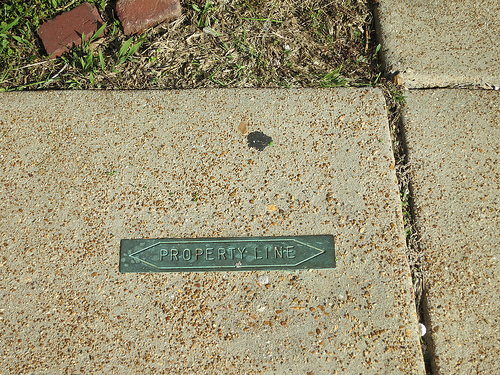
  • Consider a survey. If you do not have a survey, you may find the fences are not on the borders, that the house is not on the lot that a pipeline goes through the front or backyard.
  • Title Report. Yes, this is an important part of the inspection process. Order your title from a company that is independent of the parties that will profit if the deal goes through.  Companies owned by sellers or real estate agents may have a conflict, if a title issue arises which should end the deal unless it is corrected.  Our related company, Academy Professional Settlement Services, can handle this for you, and when you use our company, we do not charge for attendance at closing in most cases.
  • Talk to the neighbors. They may know about issues that are not immediately apparent.


Don’t be afraid to hire a lawyer.  We are real estate lawyers.  We can help you quickly an inexpensively.  Our average billable time in a normal home purchase transaction is less than two hours.

Buying a New Construction Home

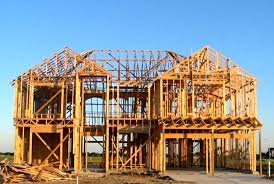
Buying a home that is a new construction home seems easier. It is certainly more risky.

It does not matter if the builder is Toll Brothers, Pulte, Orleans or Joe with a pickup truck,  the risks a buyer encounters in new construction greatly exceed the risks in purchasing a used home.

A used home can be inspected as carefully as you would like.  A used house will generally be available on the date you want to move.  The grass will be established and the trees and shrubbery will not need nursing. Most importantly, there will be no subcontractors filing mechanic’s liens because the builder did not pay.new construction

What are the real issues in buying a new home?  Let me try to list just a few.

  1. The contract used by the builder will not be a well-balanced document.  It will not be a standard form that your Realtor® or lawyer will be able to read quickly.  Instead, it will be a one sided document, designed to separate you from your money, even if the house is never built.
  2. The contract will contain an arbitration clause.  The pitch will be that arbitration is quicker and cheaper.  In large commercial disputes, that is exactly correct.  In small consumer disputes, you will be substituting a panel of one to three lawyers to act as judges, who will be paid by you and your opponent at up to $700 per hour each, for a single judge paid solely by everyone’s tax dollars.  If the arbitrator gets it all wrong, there is no appeal.
  3. There will often be no mortgage contingency.  There may be language that looks like a mortgage contingency, but read carefully. For example, the agreement of one of the largest national builders requires you to apply to their mortgage company.  The contract says that if they give you a commitment you must buy.  Here’s the problem, they will give almost everyone a commitment for a loan.  The devil will be in the conditions.  I saw one contingent on the buyers finding $45,000 more cash and raising the wife’s credit score by 50 points.  The people did not satisfy the conditions and the builder claimed their entire deposit and the note they signed for extras which were never installed as the house was never built.
  4. Mechanic’s lien risk is significant.  Most builders push you to their own title insurance company and do not offer you mechanic’s lien coverage.  This means that sub-contractors and sub-sub contractors can file a lien against your property up to six months after their work is done.

There are more risks. If you are buying new construction and do not have a real estate lawyer advising you,   you might also start reading the new book  “Brain Surgery –Self Taught.”  This is one of the biggest financial risks of your life.  Is this a good time to save a few dollars?

Adverse Possession

1.  ELEMENTS          A claimant must prove actual, exclusive, visible, notorious, distinct and hostile possession of the land continuously for 21 years.

2.  STATUTORY BASIS       The statutory basis for adverse possession is 42 Pa. C.S. § 5530, which provides that an owner is barred from commencing an action for the possession of real property after 21 years.

Photo courtesy of Paul Sabelman   http://www.flickr.com/photos/pasa/
Photo courtesy of Paul Sabelman http://www.flickr.com/photos/pasa/

3.  EFFECT     When the elements of adverse possession have been satisfied, the record owner is divested of title and absolute fee ownership vests in the claimant.  Title obtained by adverse possession is marketable.   However, the author is not aware of a title insurance underwriter that will insure such title, absent a final, unappealed and unappealable court order.

4.  DIVESTITURE     “Title [acquired by adverse possession] may be divested only in the manner in which title acquired by formal grant or conveyance may be divested and is not lost by ‘neglecting to keep up the possession.'”

5.  RECORDING       Any person who acquires title by adverse possession and who, thereafter, ceases to remain in possession of the property, must file a statement of claim within 6 months of leaving possession.  68 P.S. § 81.  Failure to record such a statement renders such title invalid against any purchaser, mortgagee or judgment creditor for value and without notice.

Neighbors Trees and Bushes at Property Lines

One of the most common points of dispute between neighbors comes from the growth of trees, shrubbery, and bushes.  The planting of an acorn five feet from a property border may be meaningless in the life of the planter.  However, as that tree grows several problems often arise. 6365071347_8881ef5bed

1.  The neighbor, who used to enjoy sitting in the sun in his or her backyard, or at a pool, does not appreciate shade for most of the day.

2.  The neighbor does not appreciate that branches from the tree have grown over into his or her yard, rubbing against the roof and dropping leaves, branches and debris.

3.  A storm causes large branches to drop damaging items in the yard, or perhaps the house.  The neighbor fears for the safety of his or her family.

4.  The neighbor’s view has been obstructed.

How are these issues resolved?  What do the Courts say?

I will address the following:


  1. Do trees support adverse possession claims?
  2. Can you cut a neighbors branches, roots or trunk?

1.     Do trees support adverse possession claims?    Here is the fast answer—-NO.

In a footnote to a Superior Court decision (Jones v. Wagner, 425 Pa. Super. 102, 624 A.2d 166 (1993)) the Court noted it might be possible to have a prescriptive easement for tree limbs after 21 years.  A prescriptive easement is like adverse possession, except title to the land cannot be claimed, only a right to use the land.

In 2004, the same Court held that no prescriptive easements are acquired by the growth of tree branches or roots which encroach onto a neighbor’s property.  The Court based its reasoning on the concept that the growth of trees cannot notify a landowner of a claim to the use of the ground and because  the “potential of widespread uncertainty occasioned by such easements convinces us that they should not be recognized as a matter of public policy.”  Koresko v. Farley,  2004 Pa. Cmwlth , 844 A. 2d 607 (2004). This was an appeal from a decision of a Chester County Judge (Robert Shenkin), who had also said no prescriptive easement arises by the growth of trees.

 2.    Can you cut a neighbors branches, roots or trunk?   Again, here is the fast answer…..YES

Because tree branches do not acquire prescriptive rights (see  section A above),  they are trespassers.  They may be removed, BUT not without risk.  First of all imagine a large oak growing over the property line.  Then imagine your surveyor properly locates the boundary and you set up one of those rotating red lasers on the line.  At night, with the laser spinning and marking the edge of the property, you climb into a bucket truck and cut all the branches at a point 2 inches on your side of the line.  You get out of the truck and go to bed thinking you are home free. The tree now has large, heavy branches on your neighbor’s side and little stubs that go 2 inches onto your side of the boundary.  Your neighbor comes out in the morning and is furious (Oops… maybe you should have given advance notice of your plans).  It takes three or four weeks for your neighbor to get a surveyor out, but when the surveyor arrives, the weight of the lopsided tree has cause it to bend significantly away from your property.  Your neat straight vertical line of cuts are now an angled line with the top located 3 feet onto your neighbor’s property.  His arborist claims the cuts will be fatal and that the tree was worth $75,000.

A landowner may use self-help to remove encroaching tree limbs (so long as he does not trespass on the neighbor’s property), and thereafter recover his reasonable expenses from the trespasser.  The landowner will not be held responsible for any resultant damage to the trees.  In the alternative, the landowner may seek injunctive relief, together with incidental and consequential damages.  Jones v. Wagner, 425 Pa. Super. 102, 624 A.2d 166 (1993) (Note:  In a footnote, the court notes that it may be possible to have a prescriptive easement for the tree limbs after 21 years… )

However, the Superior Court recently held that no prescriptive easements are acquired by the growth of tree branches or roots which encroach onto a neighbor’s property.  The Court based its reasoning on the concept that the growth of trees cannot notify a landowner of a claim to the use of the ground and because of the “potential of widespread uncertainty occasioned by such easements convinces us that they should not be recognized as a matter of public policy.”  Koresko v. Farley,  2004 Pa. Cmwlth , 844 A. 2d 607 (2004).

Nature of Judgment Liens in Pennsylvania

The Pennsylvania Supreme Court discussed the nature of judgment liens in the case of In re: Upset Sale, Tax Claim Bureau of Berks County, 505 Pa. 327, 479 A.2d 940, 943-44 (1984).  The Supreme Court stated as follows:


Judgment liens are a product of centuries of statutes which authorize a judgment creditor to seize and sell the land of debtors at a judicial sale to satisfy their debts out of the proceeds of the sale.  The judgment represents a binding judicial determination of the rights and duties between the parties, and establishes their debtor-creditor relationship for all the world to notice when the judgment is recorded in a Prothonotary’s Office . . .


The judgment lien represents security for the underlying debt, Commonwealth v. Meyer, 169 Pa. Super. 40, 82 A.2d 298 (1951), and conveys a right of execution to the             judgment creditor in satisfaction of his debt . . .


The existence of a judgment lien prevents a debtor from encumbering or conveying any property he might own in such a way to divest the effect of the judgment, while also preventing later lien holders from satisfying their debt without first paying the earlier lien.  The judgment lien thus constitutes a liquidated claim, Educational Society v. W.D. Gordon, 310 Pa. 470, 166 A. 499 (1933), which has value to the judgment creditor.  The judgment can be assigned, pledged or used as collateral and is a valuable form of property . . .


A judgment lien is called a general lien – unlike a mortgage which is a specific lien against a particular piece of real property.  Such has been the recognized law in this Commonwealth for some time. Ruth’s Appeal, 54 Pa. 173 (1867).  Our law recognizes that a judgment is a hold on all the debtor’s real estate without discrimination, but our courts have consistently concluded that the judgment creditor is not interested in the property as property, but only in the lien.  As was said in Cover v. Black, 1 Barr 493 (1845):  “The judgment creditor has neither jus in re nor ad rem as regards the [debtor’s] property.  He has a lien, and the law gives a right to satisfaction out of the property, and that is all.” Grevermeyer v. Southern Mutual Insurance Company, 62 Pa. 340 (1869).


While judgment-creditors have neither estate nor right in the lands of their debtor, it has never been the law that they do not have any protectable property interest.  Witmer Appeal, 45 Pa. 455 (1863).  Quite to the contrary, the judgment itself is property which may be defended by forced judicial sale of the debtor’s land.  It is quite properly said that the judgment creditors are interested in the property of the debtor only because they have a right to seize it, sell it, and satisfy the debt from the proceeds of the sale.  It is this very right of execution which gives a judgment lien its effectiveness and great value.


Mortgages are liens – and hence property interests – on specific assets.  A judgment is also a lien–and hence a property interest–covering all real property of the debtor against whom it is entered.  Judgments are no less property interests because they are general security interests, attaching to all of a debtor’s real property within the territorial jurisdiction of the court among whose records they are filed, rather than to a specific parcel.


In Re: Upset Sale, at 943-44.

(c) 2010 James S. Tupitza

Extent of Lien of Judgment in Pennsylvania

A.        Lien Against All Real Property of Judgment Debtor:

When entered of record, a judgment operates as a lien against all real property of the judgment debtor in the county in which it was filed.  42 Pa. C.S.A. § 4303(a) (1982).  The lien of a judgment binds all real property of the debtor whether legally or equitably held.  Clariton Corp. v. Chicago Title Ins. Co., 438 Pa. Super. 488, 652 A.2d 916, 919 (1995), allocatur denied, 665 A.2d 466 (1995); Parnes v. Hibbs, 191 Pa. Super. 56, 155 A.2d 426, 427 (1959).  However, a judgment is not a lien against real property to which the judgment debtor holds only the bare record title and no beneficial interest.  Sill v. Swakhamer, 103 Pa. 7 (1883).


B.        Previously Conveyed and After-Acquired Real Property:

A judgment is only a lien against the real property which the judgment debtor owns at the time that the judgment is entered.  A judgment is not a lien against real property which the debtor has previously conveyed in good faith.  Davis v. Commonwealth Trust Company, 335 Pa. 387, 7 A.2d 3, 6 (1939).  Similarly, a judgment is not a lien against real property which the judgment debtor acquires after the judgment has been entered of record.  Philadelphia Nat’l Bank v. Taylor, 421 Pa. 35, 218 A.2d 246, 247-48 (1946).  However, a judgment can be made a lien against after-acquired real property by revival of the lien after the real property has been acquired.  Judgment Lien Law of July 3, 1947, P.L. 1234, 12 P.S. §880 repealed by Judiciary Act Repealer Act of April 28, 1978, P.L. 202 §2(a)).  The Judgment Lien Law was suspended by the Pa. R.C.P. 3025 et seq., relating to the procedure for the revival of judgments, but these rules do not alter the substantive effect of the revival of judgments on after-acquired real property.  Ladner on Conveyancing in Pennsylvania, § 16.01, n.11 (4th ed. 1994).  See 42 Pa. C.S.A. §§ 1722, 4303.  For a discussion of the procedure for the revival of judgments, see infra section VI.


C.        Agreement to Restrict Lien:  The lien of a judgment can, by agreement, be restricted to a particular piece or  interest in real property of the judgment debtor.  Stanton v. White, 32 Pa. 358 (1859).  A restricted judgment, upon unconditional revival, becomes a general lien on all real property of the judgment debtor as of the date of revival. McMurray’s Administrators v. Hopper, 43 Pa. 468 (1863).


D.        Entireties Real Property:  A judgment entered against one spouse individually is not a lien against real property held by both spouses as tenants-by-the-entireties.  Constitution Bank v. Olson, 423 Pa. Super. 134, 620 A.2d 1146, 1153 (1993); Klebach v. Mellon Bank, N.A., 388 Pa. Super. 203, 565 A.2d 448, 450 (1989), allocatur denied, 593 A.2d 420 (1991); Reliance Insurance Co. v. Schoolfield Construction Co, 14 Pa. D. & C.4th 490, 494 (1992); United States of America v. Chapuistat, 8 Pa. D. & C.4th 467, 471 (1990); Blusiewicz v. Rosenfield, 33 Pa. D. & C.2d 470, 473 (1964).  However, upon divorce, spouses who previously held real property as tenants-by-the-entireties become owners as tenants-in-common.  23 Pa. C.S.A. § 3507(a) (1990); Weaver v. Weaver, 413 Pa. Super. 382, 605 A.2d 410, 411 (1992).  Accordingly, in Bayer v. Bayer, 65 Pa. D. & C.2d 615 (1974), the court held that a judgment entered against one spouse prior to divorce becomes a lien against that spouse’s interest in real property as a tenant-in-common upon the entry of a divorce decree.  Real property held as tenants-in-common is lienable by judgment creditors of the separate tenants.  Wirtz v. Philips, 251 F. Supp. 789, 808 (W.D. Pa. 1965).   A judgment against one party becomes a lien on the property upon death of the other spouse and the lien priority date is the date the judgment was entered.   In the case of a bifurcated Divorce, while 68 P.S. 501 may operate to sever the tenancy by the entireties, the property does not loose its marital character.  Jawork v. Jawork, 378 Pa. Super. 89, 548 A.2d 290  (1988). As marital property subject to an order of court, the property is in custodia legis pending compliance with the courts’ order, and is not subject to attachment until the court order has been complied with.  Klebach v. Mellon Bank, N.A. 388 Pa. Super.203 565 A.2d 448 (1988)


E.         Real Property Held or Sold Under an Agreement of Sale:  A judgment against a vendee under an agreement of sale for the purchase of real property is a lien against the vendee’s equitable interest in the real property and binds the legal estate the moment it merges with the vendee’s equitable interest. Commonwealth v. Mars, 8 Pa. D. & C.2d 745 (1956). “A judgment against a vendor of land under an agreement of sale binds his legal estate as well as beneficial interest, an interest in the amount of the unpaid purchase price.”  Second National Bank  v. Anderson, 71 Pa. D. & C.2d 471, 475 (1976) (citations omitted).  If the judgment creditor has notice of the agreement prior to entering judgment, his lien only attaches to the unpaid purchase price of the real property.  Id.  See generally 21 P.S. §5351 (Pennsylvania recording statute).


F.        Lien against Property during Divorce:   Following a line  of cases the Superior Court in Frantz v. Frantz 972 A.2d 525 (Pa. Super 2009) found that during the divorce proceeding,  property held by the entireties was in custodia legis  and not subject to a lien against either owner, and further even after divorce and the conversion of the tenancy, a lien could not attach.  The Court relied on   Klebach v. Mellon Bank, N.A., 388 Pa.Super. 203, 565 A.2d 448 (1989)

Effect of Judgment as Lien in PA

A.        Lien of Money Verdict:


Any judgment or other order of a court of common pleas for the payment of money shall be a lien upon real property on the conditions, to the extent and with the priority provided by statute or prescribed by General Rule adopted pursuant to section 1722(b) . . . when it is entered of record in the office of the clerk in the court of common pleas of the county where the real property is situated, or in the office of the clerk of the branch of the court of common pleas embracing such county.


42 Pa. C.S.A. § 4303(a) (Supp. 1996).  See 42 Pa. C.S.A. §1722(b) (1981) (granting governing authority of judicial system power to prescribe and modify general rules concerning enforcement and effect judgments and other orders).


B.        Compulsory Arbitration:  Pa. R.C.P. 1306 provides that “the [arbitration] board shall make an award promptly upon the termination of the [arbitration] hearing. Pursuant to a 2008 amendment, an arbitration award is not a lien on real estate until thirty days have passed with no appeal filed.


C.        Partnerships:  Pa. R.C.P. 2132(a) provides that “a judgment entered against a defendant partnership sued in its firm name only shall support execution upon the partnership property only.”  Pa. R.C.P. 2132(b) provides as follows:


A judgment entered against a defendant partnership sued in the name or names of the partners as individuals trading in the firm name shall support execution upon the partnership property and upon the individual property of any partner named as a party if jurisdiction has been validly obtained as provided by Rule 2131 . . . .


Pa. R.C.P. 2132 (b).


D.        Unincorporated Association:  Pa. R.C.P. 2158 provides that “a judgment entered against an association sued in the name of the association or in the name of the trustee ad litem, or sued alone or together with a member of the association or other person, shall support execution upon the property of the association.”


E.         Priority of Judgment Liens Against Real Property:  The priority of the various types of liens against real property, including judgments, is set forth at 42 Pa. C.S.A. §8141 as follows:


Liens against real property shall have priority over each other on the following basis:


(1)  Purchase money mortgages, from the time they are delivered to the mortgagee, if they are recorded within ten days after their date; otherwise, from the time they are left for record.  A mortgage is a “purchase money mortgage” to the extent that it is:


(i) taken by the seller of the mortgaged property to secure the payment of all or part of the purchase price; or


(ii) taken by a mortgagee other than the seller to secure the repayment of money actually advanced by such person to or on behalf of the mortgagor at the time the mortgagor acquires title to the property and used by the mortgagor at that time to pay all or part of the purchase price, except that a mortgage other than to the seller of the property shall not be a purchase money mortgage within the meaning of this section unless expressly stated so to be.


(2)  Other mortgages and defeasible deeds in the nature of mortgages, from the time they are left for record.


(3)  Verdicts for a specific sum of money, from the time they are recorded by the court.


(4)  Adverse judgments and other orders, from the time they are rendered.


(5)  Amicable judgments, from the time the instruments on which they are entered are left for entry.


(6)  Writs which when issued and indexed by the office of the clerk of the court of common pleas create liens against real property, from the time they are issued.


(7) Other instruments which when entered or filed and indexed in the office of the clerk of the court of common pleas create liens against real property, from the time they are left for entry or filing.


42 Pa. C.S.A. § 8141.


NOTE:  42 Pa.C.S.A. sec. 8141 involves the relationship of judgment liens for priority purposes, but always be careful to ascertain the effect of other types of liens and their effect on priority.  See the sections in these materials covering federal tax liens, state and municipal liens, corporate taxes, real estate taxes and mechanics liens.


F.      Confession of Judgment on Bond Accompanying Mortgage:  A confession of judgment proceeding on the bond accompanying a mortgage is a proceeding in personam.  Bank of Pennsylvania v. G/N Enterprises Inc., 316 Pa. Super. 367, 463 A.2d 4, 6 (1983).  The object of the proceeding is to obtain judgment against the obligor of the bond.  Id.  Unlike a judgment in mortgage foreclosure, a judgment confessed on the bond accompanying a mortgage is not limited to the mortgaged premises.  Id.  Rather, a judgment confessed on the bond is a general lien on any real property owned by the obligor at the time of the judgment.  Id.  In relation to the mortgaged premises, the lien of the judgment relates back to the date that the mortgage was recorded.  Id. (citing First Federal Savings & Loan Ass’n of Greene County v. Porter, 408 Pa. 236, 243, 183 A.2d 318, 323 (1962)).


G.    The Federal Priority Statute, 31 U.S.C. §  3713(a)   This statute provides that a claim of the United States Government “shall be paid first” when a decedent’s estate cannot pay all of its debts.  The government has often alleged that this law gives it priority over perfected liens unless there has been a levy and execution on property.


a.       The Supreme Court of the United States acknowledged that it “has never definitively resolved the basic question whether the federal priority statute gives the United States a preference only over other unsecured creditors, or whether it also applies to the antecedent perfected liens of secured creditors.”   United States v. Estate of Francis J. Romani, 523 U.S. 517, 118 S.Ct. 1478, 140 L.Ed.2d 710 (1998)


b.      The Romani Court held first that  “the 1966 amendments to the Tax Lien Act bespeak a strong condemnation of secret liens, which unfairly defeat the expectations of innocent creditors and frustrate “the needs of our citizens for certainty and convenience in the legal rules governing their commercial dealings” and then went on to affirm the Pennsylvania Supreme Court  stating “nothing in the text or the long history of interpreting the federal priority statute justifies the conclusion that it authorizes the equivalent of a secret lien as a substitute for the expressly authorized tax lien that Congress has said “shall not be valid” in a case of this kind

Tenants by the Entireties – Pennsylvania

A.  Tenancy by the Entireties.


1.  A conveyance to husband and wife is presumed to create a tenancy by the entireties.[1]  This presumption can only be overcome using clear and convincing evidence of a contrary intent.[2]

2.  Only husband and wife can be tenants by the entireties, so a deed purporting to create tenancy by the entireties in unmarried persons will create either joint tenancy or tenancy in common, depending on intent.[3]


3.  If man and woman acquire property as tenants in common and subsequently marry each other, they remain tenants in common unless they deed the property to themselves again after marriage.[4]


4.  The husband and wife are considered a single entity which owns 100% of the property.[5]


5.  Neither spouse, acting independently, can sever a tenancy by the entireties.[6]  Partition is not available until after divorce.[7]


a.  In Clingerman[8], entireties property was appropriated by the husband, and the wife filed a partition action.  She died while the action was pending.  The Court held that the misappropriation coupled with the filing of a partition action constituted an implied agreement to sever the tenancy.


b.  In a case involving entireties bank accounts, the Court held that spouses are to exercise their withdrawal power “in good faith and for the mutual benefit of both”, and that a misappropriation “works a revocation of the estate by the fiction of the appropriation’s being an offer of an agreement to destroy the [entireties] estate and an acceptance of the offer when the other spouse starts suit; the property is then fit for accounting and division.”[9]


6.  The only ways to sever tenancy by the entireties are by joint acts[10], such as: divorce[11], joint conveyance, and mutual agreement (either express or implied).[12]  The entry of a divorce decree creates a tenancy in common subject to rights of equitable distribution.


7.  Property held by the entireties is not affected by the bankruptcy of one spouse, cannot be attached by creditors of one spouse, and title cannot be conveyed by one spouse.  “[N]either [spouse] has an individual portion separated, or can be reached by the creditors of either spouse.”[13]  The exception to this rule is where individually-held property is conveyed to tenancy by the entireties in fraud of creditors.[14]


[1]Madden v. Gosztonvi Savings & Trust Co., 331 Pa. 476, 200 A. 624 (1938).

[2]Constitution Bank v. Olsen, 423 Pa. Super. 134, 620 A.2d 1146 (1993).

[3]Estate of Reigle, 438 Pa. Super. 361, 652 A.2d 853 (1995).

[4]Dvorshock v. Dvorshock, 57 Pa. D. & C. 2d 63, 66-7 (1970).

[5]Di Florido v. Di Florido, 459 Pa. 641, 331 A.2d 174 (1975).

[6]Backus v. Backus, 464 Pa. 380, 346 A.2d 790 (1975); Del Borrello v Lauletta, 455 Pa. 350, 317 A.2d 254 (1974).

[7]Shapiro v. Shapiro, 424 Pa. 120, 224 A.2d 164 (1966).

[8]Id.

[9]Stemniski v. Stemniski, 403 Pa. 38, 169 A.2d 51 (1961).  See also, Rega v. Rega, 46 Wes.C.L.J. 75 (1964).

[10]DeCoatesworth v. Jones, 536 Pa. 414, 639 A.2d 792 (1993).

[11]68 P.S.  501.

[12]Clingerman v. Sadowski, 513 Pa. 179, 519 A.2d 378 (1986).

[13]Madden v. Gosztonvi Savings & Trust Co., 331 Pa. 476, 482, 200 A. 624 (1938).  See also, Howard Savings Bank v. Cohen, 414 Pa. Super.  555, 607 A.2d 1077 (1992).

[14]Corcia v. Hendrie, 427 Pa. Super. 585, 629 A.2d 1024 (1993).