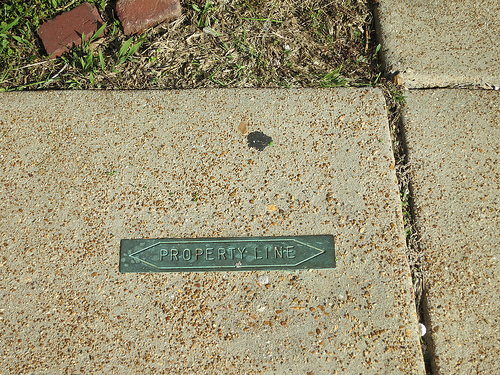
Oil or Gas Pipeline -Impact the Value of Property

Will an Oil or Gas Pipeline Impact the Value of Your Property?

New Pipeline projects in PA have the potential to impact the value of your property and the  comfort of hundreds of thousands of property owners.  There are numerous pipeline projects in development and the start up phases.  It is more important than ever to know what is coming before it comes.  Here are a few tips on the topic and a list of the current major projects.  (Note:  Even minor projects can be disruptive).

TIPS

  • First of all, the time for steering a pipeline away from your property is in the very early stages.  Often the engineers are not able to understand the nature of the ground along the entire proposed line.  In one case we met with the designers and engineers before the route was finalized, because we learned the line was proposed to go through the farm of a long time client. During the meeting we walked the property and showed the pipeline reps the nature of the ground under the surface.  2 feet down was a   solid layer of quartz rock (can you spell blasting?)  We were able to steer the line 1/2 mile away from the farm.
  • The pipeline is coming.  If you think you can stop it, you are fooling yourself.  What you need to do is minimize its impact and maximize your payment.  We have found that most of the landmen (men and women) are decent reasonable people who simply want to get their job done.  If you think hiring a lawyer who yells and scream at them, and threatens court, will help you….. you have a lot to learn.  We find we get more from honey than vinegar. When negotiating does not work we have significant deep experience in court.  The fact that we are willing to go to court (and in fact  enjoy it) makes pipeline companies want to settle with us to avoid certain litigation.
  • You cannot negotiate this yourself.  Have you ever heard of brain surgery–self taught???   You need a real estate lawyer with a proven track record.
  • The sooner you see a lawyer, the better.  It is good to negotiate at the same time as neighbors, but every property is unique and ever easement is negotiated individually.  You cannot cross pollinate negotiations.  We do not discuss two  clients issues in the same phone call unless they are in different locations.
  • If the pipeline company involuntarily takes your property, under the law, they have to pay your legal and appraisal fees, but only up to $4,000.
  • In almost all cases, we negotiate for payment of our full fee from the pipeline company.

Let’s talk about the 7 major new pipelines.  We will give you a link to enable you to go right to the horse’s mouth as to each pipeline.


Our team at Tupitza & Associates stands ready to consult with impacted property owners.  We handle these issues across the state—- in all 67 counties.  We travel for meetings with groups of clients and also meet by phone or WebEx sessions.

Sunoco Logistics Mariner East Pipeline

PIPELINE TO IMPACT PENNSYLVANIA PROPERTY OWNERS

This past year, 2015, has been a trying year for property owners living near the existing Sunoco pipeline.  The line goes from Marcus Hook, Delaware County, PA to Washington County, PA.    The existing pipeline  carried products from the former oil refinery in Marcus Hook  to markets in the west.  It is being refurbished, as the Mariner East Project, to carry natural gas liquids to Marcus Hook.  The gas will be  for both domestic distribution and export from Washington County, PA.  It will cross the entire width of the state.

There are several problems.  The pipeline goes along existing easements or rights of way.  Sunoco needs more room for additional pipes. They need room for doing the work.  They need room for valves and safety equipment.  You will be offered a conservative payment to simply sign.  Of course the money will not be the big issue.  You should be concerned that they will take down trees and landscaping.  Historic features, such as stone walls and out buildings will have to go……….  You need to consult with an attorney to CONTROL the issue.  You will never stop the pipeline.  You may be able to control.

ACTION PLAN  Tupitza & Associates represents landowners

The company provides notice to property owners of work to be done on their properties to refurbish the  line, add a new line and/or add valves.  Attorney M. Bobbie Kalia, of this office has represented numerous property owners in negotiating additional compensation, and terms protecting property.  It does not matter where in Pennsylvania your impacted property may be, Ms. Kalia can help you.

If you have received a notice related to your property, sign nothing until you have consulted with an attorney experienced in dealing with pipelines. In most cases Ms. Kalia is able to increase the payment offered to you, secure terms to protect trees, landscaping, stone walls, etc. and have Sunoco pay her fee.   M. Bobbie Kalia 610-696-2600

Here are a few links to stories about the pipeline:       https://www.sstwp.org/DocumentCenter/Home/View/5442

https://stateimpact.npr.org/pennsylvania/2015/08/12/sunoco-launches-eminent-domain-proceedings-for-mariner-east-2-pipeline/

http://www.marcellus-shale.us/Sunoco-Mariner-East.htm


Mariner East MapPipeline Map-  Mariner East Sunoco

Challenge of Gas Lease- No Extension of Term

Wayne and Mary Harrison challenged the validity of their gas lease with Cabot Oil & Gas, and Cabot claimed such challenge in the courts acted to repudiate the lease thus entitling it to relief which extended the term of the lease.  The case was tried in federal district court and reached the Court of Appeals. The federal district court awarded summary judgment in Cabot’s favor on the suit to invalidate the lease. That court ruled in Harrison’s favor holding “the law of this Commonwealth does not provide for equitable extensions of oil and gas leases under the circumstances.”  While the appeal to the Court of Appeals (Third Circuit) was pending, that court asked the PA Supreme Court to address this question:  “whether the primary term of an oil-and-gas lease should be equitably extended by the courts, where the lessor has pursued an unsuccessful lawsuit challenging the validity of the lease.”

Cabot argued it could not spend between $4M and $7M to develop a Marcellus Shale well, while it was tied up in court with a challenge to its lease. Cabot claimed it wanted the benefit of its bargain. Cabot asked the PA Supreme Court to join other states which have found meritless challenges to leases to be repudiations which warranted the application of equitable principles to extend the lease terms.  They contended Pennsylvania already recognizes all legal predicates to this equitable extension principle.

The Harrisons described the equitable-extension principle as nothing more than a “judicial affirmative action program” for oil and gas producing companies which “abuses landowners who have done nothing other than exercise their legal rights.”  They claimed the lease was not repudiated by filing the declaratory judgment action.

The Supreme Court first noted something more than a mere assertion of a challenge to the validity of a lease is required to be a breach, or anticipatory breach, of the contract. They noted that in the broader context of contracts, filing a declaratory judgment action does not constitute a refusal to perform.  Reflecting on the Harrisons assertions that the gas companies enjoy superior bargaining position in leasing activities, the Court pointed out that the companies were free to insert tolling language in their leases and did not do so.  The Court then held that the mere pursuit of declaratory relief does not amount to a repudiation of the lease and that Pennsylvania will not adopt a special approach to repudiation pertaining only to oil and gas leases.

See Harrison v. Cabot Oil & Gas Corporation, 75 MAP 2014, February 17, 2015

Real Estate Agent NO-DEAL-Notice

All we need is one more Real Estate Agent Notice…….   However, in a discussion yesterday, it became clear that it is very easy to confuse the subject of offer, counteroffer, counter counteroffer, E TC in real estate contract formation.  I know a lot of real estate agents will call the other agent and say “we have a deal.” Is there really a deal before both parties sign the final version of the contract, and those copies are in possession of both the buyer and seller?  Do we need a “NO-DEAL-NOTICE”  ?

Many people say this is not a problem because the Statute of Frauds requires real estate contracts to be in writing. That is true except under the circumstances where all parties testify they reached an agreement. The Statute of Frauds does not protect a seller who has entered into an oral contract and is willing to admit. It protects a seller who does not testify a contract exists. To make things even more complicated, the Statute of Frauds protects against the remedy of specific performance. In other words you can’t force somebody by an oral agreement to sell you their property. On the other hand if you can prove the contract, there are some cases which indicate you may be able to get contractual damages.

I have written a little notice that I think all real estate agents need to put in their signature line for all emails.  This notice should be given to all real estate buyers and sellers:

IMPORTANT NOTICE:

I am a real estate licensee.  Whether I represent the Buyers, or the Sellers, or neither, the following statement is applicable:   All offers to buy, and all acceptances of those offers, including counter-offers,  must be in writing signed by the Buyers and the Sellers, and are binding only when delivered to those parties.  I do not have the authority to make, or accept,  any offers or counter-offers. 

Title Insurance Licensing Exam Training

Everyone in the title insurance industry recognizes that title insurance licensing exam training will be a hot topic this year. The PA Title Insurance Licensing Exam will be required of many in the industry.  This is driven by lenders and by the American Land Title Association’s Best Practices (http://www.alta.org/bestpractices/index.cfm )       James S. Tupitza announces that a new text book, designed to assist individuals preparing to take the PA Title Insurance Licensing Exam.  The new ALTA Best Practices create a new emphasis on licensing.

Go to this page for a brief sample:   https://tupitzalaw.com/title-ins-exam-study-guide    This sample is of the very difficult regulatory portion of the study guide.   This sample:  Sample Pages Real Estate   gives you a brief idea of the areas dealing with real estate law.

The new guide will provide a comprehensive, up to date, guide to the PA Title Insurance Exam.  It will also be a valuable desk guide to real estate and the title insurance industry.  It will include numerous forms and a copy of the Rate manual developed by the Title Insurance Rating Bureau of PA (TIRBOP). In addition to substantive material, it will include sample exams to assist individuals in preparation fro the PA Title Insurance Licensing Exam.  The book will be available separately or in connections with registration for a two day study program.


Cover Page

Procurring Cause – Which agent Gets the Commission?

An interesting question was posed by a real estate licensee the other day.  Let’s look at the facts:

Agent 1 was driving the consumers around and pointed to a new community as they drove past its entrance.  Weeks later the consumers, without any recollection of the property, drove in and looked at the sample.  They met with the Sellers agent (Agent 2), who informed them she did not want to be a dual agent.  They met with the builder and the seller’s agent 20 or 30 times.  More than 250 e-mails were exchanged.  The plans for the home were changed by the builder, with the input from the agent and buyer numerous times.  Finally, the builder said “No more free work without a contract.”  The agent told the buyers to come to her office the next day to prepare the contract so they could have their attorney perform a review.   The next day a contract came in naming Agent 1 as buyers’ agent and demanding one half of the commission.   What portion of the commission is Agent 1 entitled to receive?

There are not many recent Pennsylvania decisions on this topic.  That is because almost all the disputes go to arbitration and never see a court room. There is some good authority from New York which I will examine.   First let’s try to remove some of the clutter from the facts that try to drive a decision by emotion rather than by law.

Every buyer is entitled to a buyer’s agent.  Is every buyer’s agent entitled to share in the commission paid to the seller’s agent?  It seems rather easy to get lost on the topic of being fair to the agent that writes the contract.  The concept of agency is (in my humble opinion) the wrong path to a just resolution.  Emotionally it seems attractive, but it does not follow the courts that have addressed the issue.

The real issue is who sold the house.  In legalese this is often stated as “Who was the efficient and procuring cause?”  The National Association of Realtors has a list of standards that apply to answer this question.  We know this: the buyers went knowing nothing of the property to actually buying it and living there.  It seems that the real test is to take all the facts and place them in one of two columns: one favoring the seller’s agent and one favoring Agent 1.  Some of those facts will have more weight, but that can be the subject of a mental adjustment.

Agent 1           Drove by entrance to community,     Prepare an Agreement of Sale


Agent 2 (Seller’s Agent)       Met with the buyers and showed them the community,   Met with the buyers and helped them pick a specific lot.       Met with buyers and helped them pick a specific model home.  Met with buyers and builder to develop changes to plans  (12 meetings).   E-Mails to and from the buyers about details of the home they were buying  (200+).  Discussions with the buyers about financing the project and a budget.   Meeting with the buyer to discuss price.

With  lists like this it is obviously easier to see who it was that sold the home.  That person is the procuring cause of the sale and is entitled to the commission UNLESS, the multi-list terms and conditions offer to pay a buyer’s agent regardless of procuring cause.


Home Improvement Consumer Protection Law (HICPA)

Home improvement contractors in Pennsylvania are subject to regulation. Homeowners often get confused about when the new law, known as the Home Improvement Consumer Protection Act (“HICPA”) applies.  Here is an excerpt from some Continuing Legal  Education materials we recently published that deals with this ACT. It is in outline form.  If you have more questions call us.

HICPA (the Home Improvement Consumer Protection Act 73 P.S. ¶ 517.1 et seq)

  1. The Requirement of Registration – section 517.4 requires registration for anyone who performs home improvement work.
  2. Home Improvement Contracts. The law provides that a home improvement contract is not valid and not enforceable unless:
    1. It is in writing and contains the contractor’s registration number.
    2. It is signed by the owner and the contractor.
    3. It contains the entire agreement between the parties and has all required notices attached.
    4. It contains the date of the transaction.
    5. It contains the name, street address (no P.O. Box numbers), and telephone number of the contractor.
    6. It contains the approximate starting date and completion date.
    7. It includes a description of the work, materials to be used and set of specifications which cannot be changed unless signed off on by the parties.
    8. It contains the total sale price.
    9. It contains a statement of the down money plus advances for purchase of special order materials. (Note deposits cannot exceed 33.33%)
    10. It includes the name, street address and telephone number of all subcontractors known as the date of signing.
    11. It obligates the contractor to maintain liability insurance with fixed limits.
    12. It contains the toll-free telephone number for the Bureau responsible for registration.
    13. It includes a notice of right of rescission for a period of three business days.
  3. Additional provisions for home-improvement contracts:
    1. contracts which contained an arbitration clause must meet certain requirements including:
      1. the text must be in capital letters
      2. the text shall be printed in 12 point
      3. the text must appear on a separate page of paper from the rest of the contract.
      4. The text must contain a separate line for each of the parties to sign.
      5. The arbitration clause cannot be a one-way street.
      6. The text must clearly state where the decision of the arbitration is binding or whether or not it can be appealed to Common Pleas.
      7. The clause shall state whether the facts of the dispute and the decision are confidential.
    2. Voidable clauses. If any of the following clauses are in the contract the owner may elect to void the contract:
      1. a hold harmless clause
      2. a waiver of federal, state or local health life, safety or building code requirements.
      3. A confession of judgment clause (note this does not get you around other provisions in the law barring confession of judgment clauses and consumer transactions.)
      4. An assignment of wages or other compensation for services.
      5. A provision by which the owner agrees not to assert any claim or defense arising out of the contract
      6. a provision that the contractor shall be awarded attorney’s fees and costs
      7. a clause which relieves the contractor from liability for acts committed in the collection of payments or repossession of goods.
      8. A waiver of any rights under HICPA
      9. automatic renewal provisions.
  4. Criminal Provisions – Home Improvement Fraud  It is a crime to engage in certain actions, enumerated below.  Where the dollar value exceeds $2,000.00, the grading is FELONY 3.
    1.  False or misleading statement to induce a contract
    2.  Receiving an advance payment and failing to perform.
    3.  Concealing the real name of the contractor.
    4.  Damaging property in order to induce the need for more work.
    5.  Misrepresenting ones self as connected with government or a utility.
    6.  Misrepresenting that an item is special order or misrepresenting the cost of a special order item.
    7.  Altering a home improvement contract without the consent of the consumer.
    8.   Publishing false or deceptive advertisements.
  5.  Prohibited Acts.  In addition to the criminal acts, the following are prohibited:
    1.  Failing to register.
    2.  Failing to pay refunds under certain conditions including where no work has been done or more than 45 days of elapsed is the start date.
    3.  Promoting a certificate of occupancy as proof of performance when the document is false or performance is incomplete.
    4.  Using a completion certificate when you know or have reason to know the document or proof is false and it is used to secure funds either from the homeowner or a lender.
    5.  Abandoning or failing to perform without justification.
    6.  Deviate from or disregard plans and specifications.
    7.  Participating in the financing of a home improvement contract with knowledge that a monetary obligation will be created in excess of the actual price of the contract.
    8.  Advertising to perform home improvement services if you do not intend to perform the work at the charges advertised are offered.
    9.  Demanding or receiving a payment before the contract is signed.
    10.  Where the contract is for more than $1000, receiving a deposit in excess of 1/3, plus the cost of special order items.
    11.  While acting as a salesperson, failing to turn money over to the contractor.
    12.  After entering into a contract, changing the name of the contractor’s business, liability insurance information or address or any other identifying information in a fraudulent or deceptive manner likely to cause confusion or misunderstanding without advising the owner in writing.
  6.  Unfair Trade Practices and Consumer Protection Law (UTPCPL). A violation of any of the provisions of HICPA is a violation of the UTPCPL. Treat it as though it were item xxii in the list of unfair trade practices. UTPCPL allows a recovery for treble damages (up to three times the amount of actual damages) or $100 per violation, whichever is greater.  Another remedy allowed by the UTPCPL is reasonable attorney’s fees, which may be awarded in addition to any other award, and which may be substantial.
  7.  Contractor’s Saving Provision    Section 517.7 (g) of HICPA provides that nothing in the act shall preclude a contractor who has complied with subsection a, setting forth those items required to be in a contract, from recovering based on the reasonable value of the services performed. This section has recently been reviewed by the Superior and the Supreme Court, and rewritten. A simple reading of the language indicates that if you can’t enforce the contract, you can bring an action for unjust enrichment, providing you have a contract you can enforce. This obviously makes no sense.
  •  In Durst v. Milroy Gen. Ctr  52 A 3d 357 (2012 Pa. Super) the homeowner filed preliminary objections to bar a quantum meruit claim by a contractor who had an oral contract in violation of HICPA.  The Superior Court held “that quasi-contract theories of recovery survive the HICPA.”  The Durst decision was based on the fact that the clear language of the statute did not prohibit a quantum meruit claim.
  •  In Shafer Electric v. Mantia,  67 A.3d 8 (Pa. Super 2013)  the Superior Court followed Durst and held that a reading of the wording of the statute led to an absurd result which violated general principles of PA law. In this case, this panel of the Superior Court based its decision on statutory construction.
  •  In  Shafer Electric v. Mantia  96 A.3d 989 (Pa. 2013),  the Supreme Court affirmed a decision of the Superior Court, on the basis of the holding in Durst v. Milroy, 52 A.3d 357 (2012 Pa. Super.), which held an action for unjust enrichment is available to a contractor even where there is no written contract complying with HICPA.  The Court got to the same result as the Superior Court, but not for the same reasons. The Shafer Electric holding is essentially consistent with the Restatement (Third) Restitution and Unjust Enrichment, sections 31 – 36 which address the subject of awarding restitution to a performing party who has no claim under his or her contract


NBC Investigative report on Toll Brothers quotes Tupitza

NBC 4 in Washington, DC just published an investigative report on Toll Brothers. (If only we could have trained the on-air reporter to pronounce Tupitza as “2 Pits Ah”  instead of  2 pizzas!!!)  Their focus was on buyers who lost their down money when they could not get a mortgage.  Here is a snippet from the article:

“Pennsylvania-based real estate lawyer Jim Tupitza told the News4 I-Team he sees cases like this “all the time” — customers who think a Toll Brothers contract will allow them to recover their down payments if they can’t get a mortgage or close on their home, when that’s not actually the case.

Tupitza said it all boils down to the “Mortgage Application” paragraph of the Toll Brothers contract, which he said is one of the most confusing contracts in the business.

“If you read it,” said Tupitza, “you will think it says one thing. But if you diagram the sentence like you learned in high school English, you’ll realize it doesn’t say that at all.”

See full text of NBC News Article

Buying a New Construction Home

Buying a home that is a new construction home seems easier. It is certainly more risky.

It does not matter if the builder is Toll Brothers, Pulte, Orleans or Joe with a pickup truck,  the risks a buyer encounters in new construction greatly exceed the risks in purchasing a used home.

A used home can be inspected as carefully as you would like.  A used house will generally be available on the date you want to move.  The grass will be established and the trees and shrubbery will not need nursing. Most importantly, there will be no subcontractors filing mechanic’s liens because the builder did not pay.new construction

What are the real issues in buying a new home?  Let me try to list just a few.

  1. The contract used by the builder will not be a well-balanced document.  It will not be a standard form that your Realtor® or lawyer will be able to read quickly.  Instead, it will be a one sided document, designed to separate you from your money, even if the house is never built.
  2. The contract will contain an arbitration clause.  The pitch will be that arbitration is quicker and cheaper.  In large commercial disputes, that is exactly correct.  In small consumer disputes, you will be substituting a panel of one to three lawyers to act as judges, who will be paid by you and your opponent at up to $700 per hour each, for a single judge paid solely by everyone’s tax dollars.  If the arbitrator gets it all wrong, there is no appeal.
  3. There will often be no mortgage contingency.  There may be language that looks like a mortgage contingency, but read carefully. For example, the agreement of one of the largest national builders requires you to apply to their mortgage company.  The contract says that if they give you a commitment you must buy.  Here’s the problem, they will give almost everyone a commitment for a loan.  The devil will be in the conditions.  I saw one contingent on the buyers finding $45,000 more cash and raising the wife’s credit score by 50 points.  The people did not satisfy the conditions and the builder claimed their entire deposit and the note they signed for extras which were never installed as the house was never built.
  4. Mechanic’s lien risk is significant.  Most builders push you to their own title insurance company and do not offer you mechanic’s lien coverage.  This means that sub-contractors and sub-sub contractors can file a lien against your property up to six months after their work is done.

There are more risks. If you are buying new construction and do not have a real estate lawyer advising you,   you might also start reading the new book  “Brain Surgery –Self Taught.”  This is one of the biggest financial risks of your life.  Is this a good time to save a few dollars?

Adverse Possession

1.  ELEMENTS          A claimant must prove actual, exclusive, visible, notorious, distinct and hostile possession of the land continuously for 21 years.

2.  STATUTORY BASIS       The statutory basis for adverse possession is 42 Pa. C.S. § 5530, which provides that an owner is barred from commencing an action for the possession of real property after 21 years.

Photo courtesy of Paul Sabelman   http://www.flickr.com/photos/pasa/
Photo courtesy of Paul Sabelman http://www.flickr.com/photos/pasa/

3.  EFFECT     When the elements of adverse possession have been satisfied, the record owner is divested of title and absolute fee ownership vests in the claimant.  Title obtained by adverse possession is marketable.   However, the author is not aware of a title insurance underwriter that will insure such title, absent a final, unappealed and unappealable court order.

4.  DIVESTITURE     “Title [acquired by adverse possession] may be divested only in the manner in which title acquired by formal grant or conveyance may be divested and is not lost by ‘neglecting to keep up the possession.'”

5.  RECORDING       Any person who acquires title by adverse possession and who, thereafter, ceases to remain in possession of the property, must file a statement of claim within 6 months of leaving possession.  68 P.S. § 81.  Failure to record such a statement renders such title invalid against any purchaser, mortgagee or judgment creditor for value and without notice.